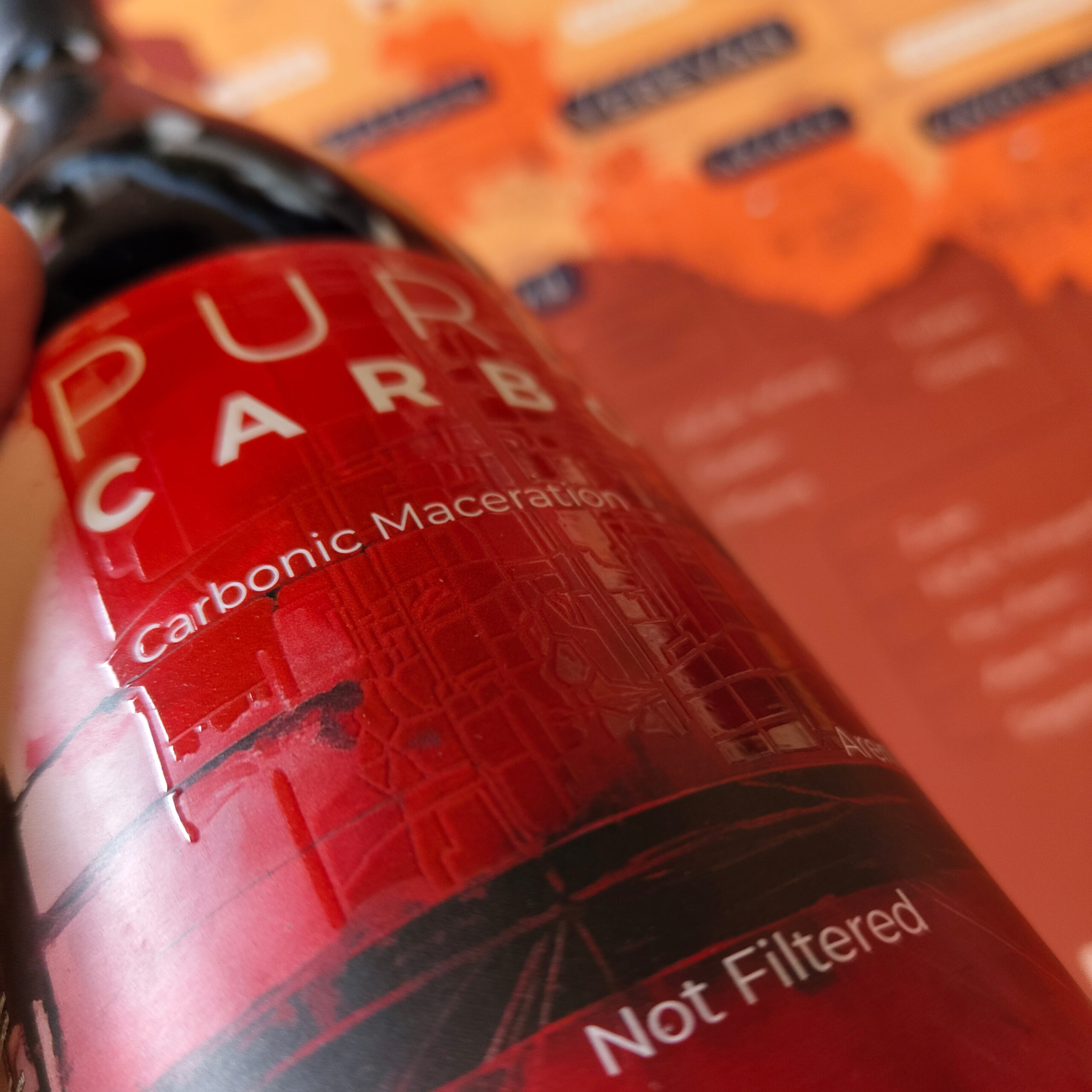
I imagine that many wine connoisseurs along Saryan Street might not expect much from this brand, but I have to say that the new experimental line from Ijevan’s winemaker, Vladimir Safaryan, is really impressive.
Pure Carbo Areni 2023
- Natural
- Non-Filtered
- Whole Bunch
- Carbonic Maceration
- Grapes from Vayots Dzor, Winery in Tavush.
- Price: ~ ֏5000
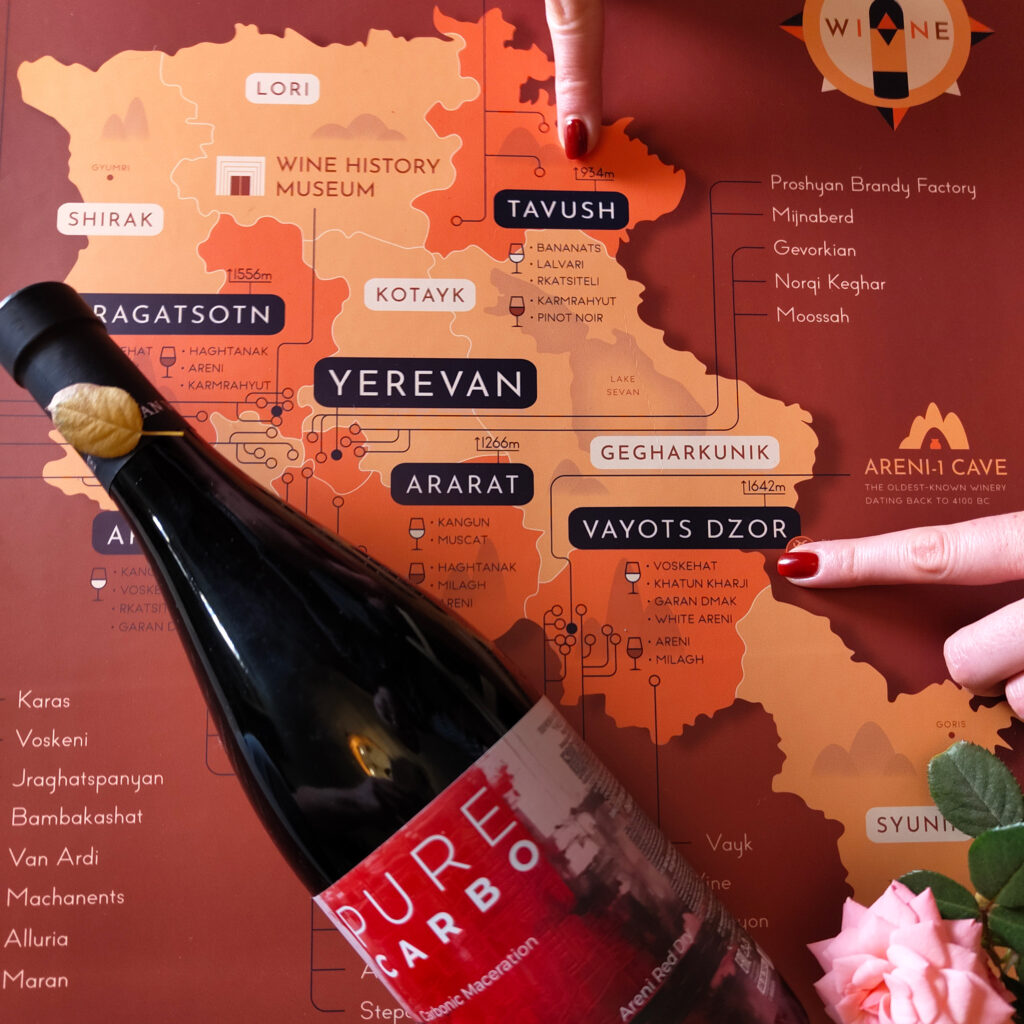
Few wine producers in Armenia have experimented with carbonic maceration, but I can only recall a few examples: Gevorkian Ariats Carbonic Kangoun (which was actually semi-carbonic, as far as I know), and Crow’s Rock’s Haghtanak and Areni, the latter of which was the first fully carbonic wine made in the French style.
Ijevan’s Pure Carbo is also made using carbonic maceration in the French style (think Beaujolais Nouveau), which is reflected in the use of the word “carbo”—that’s what they call it in France.
Australians, for example, often refer to it as “mac cab.” Essentially, it all describes the same technique, which was first discovered by Louis Pasteur and later adopted by French winemakers:
- No crushing, no destemming—whole bunches of grapes are used.
- The grapes are placed into anaerobic conditions (imagine a vat filled with CO2).
- Since the berries and their skins remain intact, yeasts can’t begin alcoholic fermentation.
- Instead, the CO2 triggers intracellular fermentation.
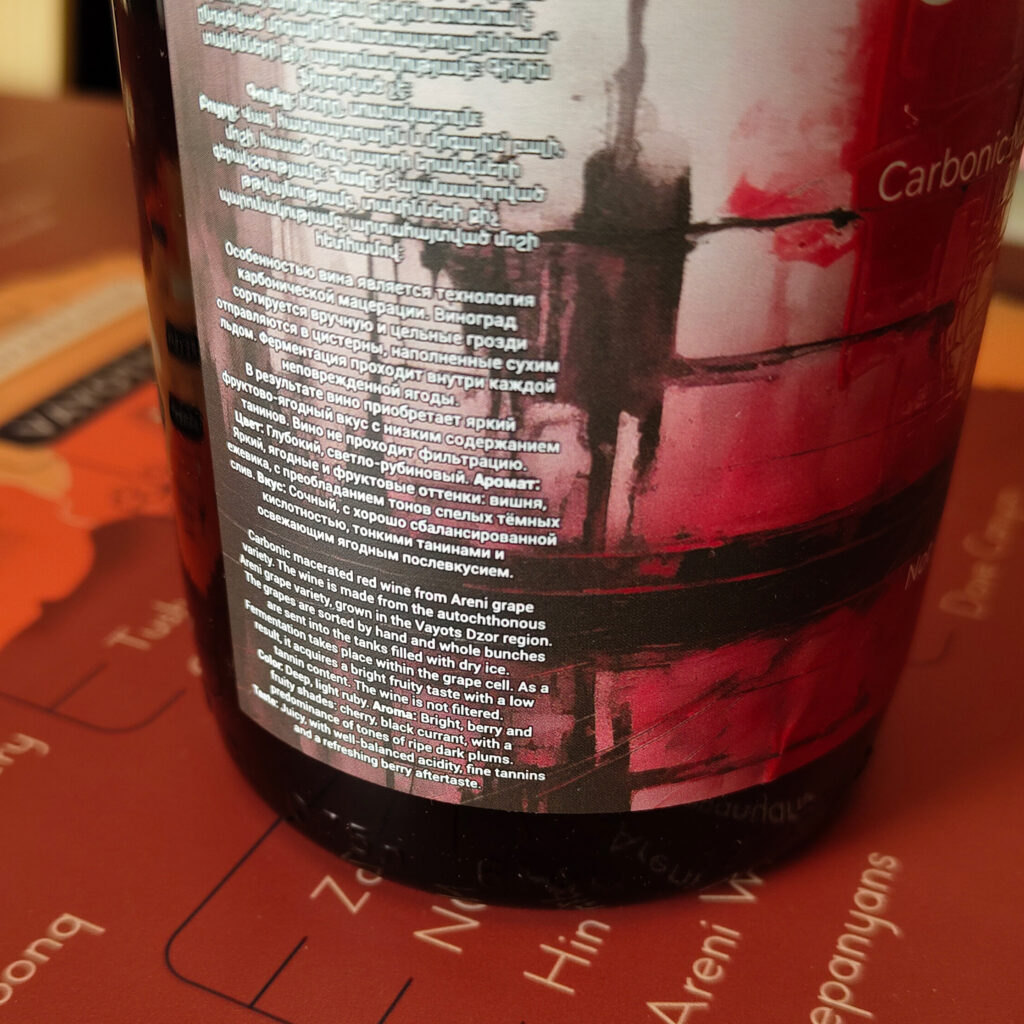
Enzymes—not yeasts—start working inside the berry, performing two key actions:
- Extracting color and aromas from the skins.
- Producing alcohol.
But this process doesn’t last forever. Like any fermentation, enzymatic carbonic maceration releases extra CO2. When the alcohol content reaches about 2%, the skins of the berries break open and the fruit releases its juice.
At this point, the winemaking process continues as usual—with the yeasts on the skins and the presence of oxygen. However, about one-seventh of the fermentation process is still done via carbonic maceration, which leads to:
- Lower tannin levels
- More pronounced fruity aromas
- Distinctive flavor and aromatic notes that people often describe as “bubble gum” or “banana” (again, think Beaujolais Nouveau)
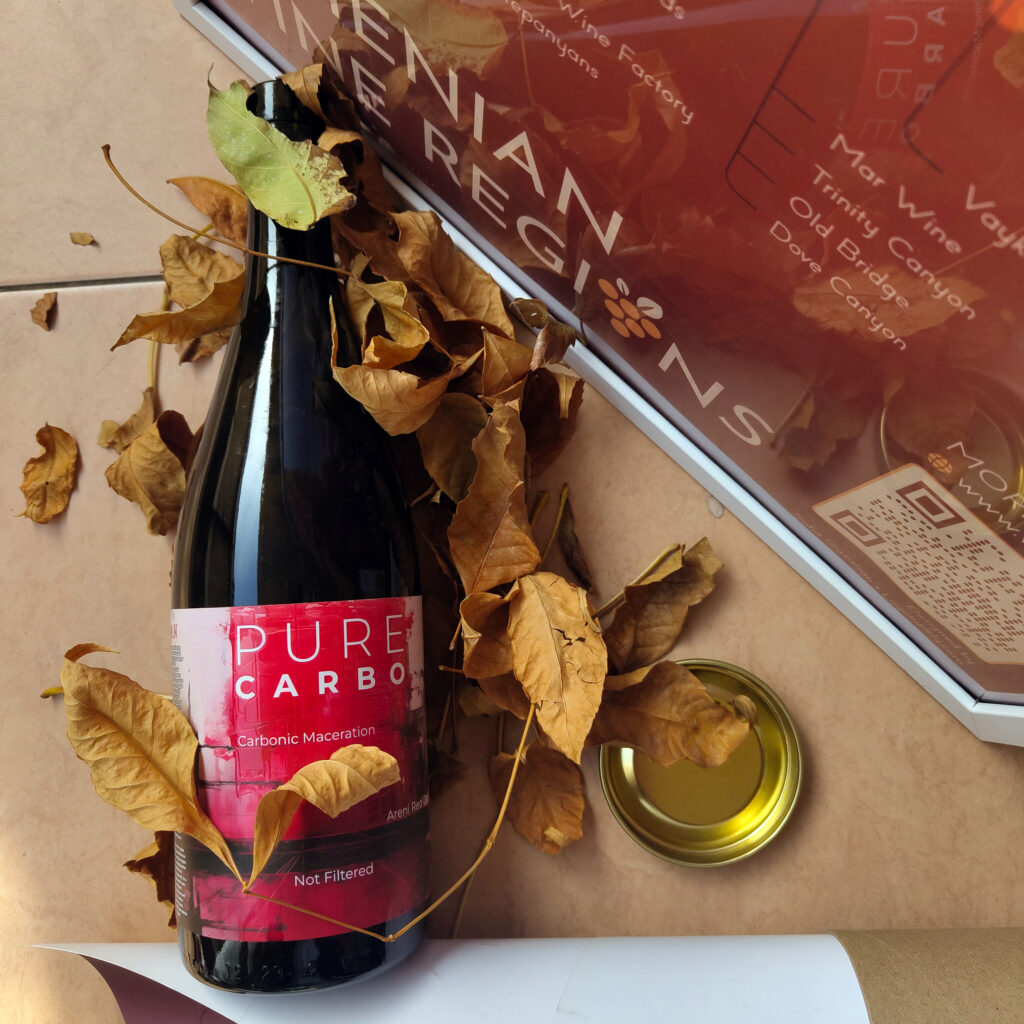
The end result is a fresh, easy-drinking red wine—perfect for those days when it’s too cold for a Sauvignon Blanc but still a bit early for a bold red. It’s meant to be enjoyed young, with little to no aging potential due to the lack of tannins and anthocyanins. However, it’s incredibly fruity and floral, with perhaps a slight greenish note, but in a good way.
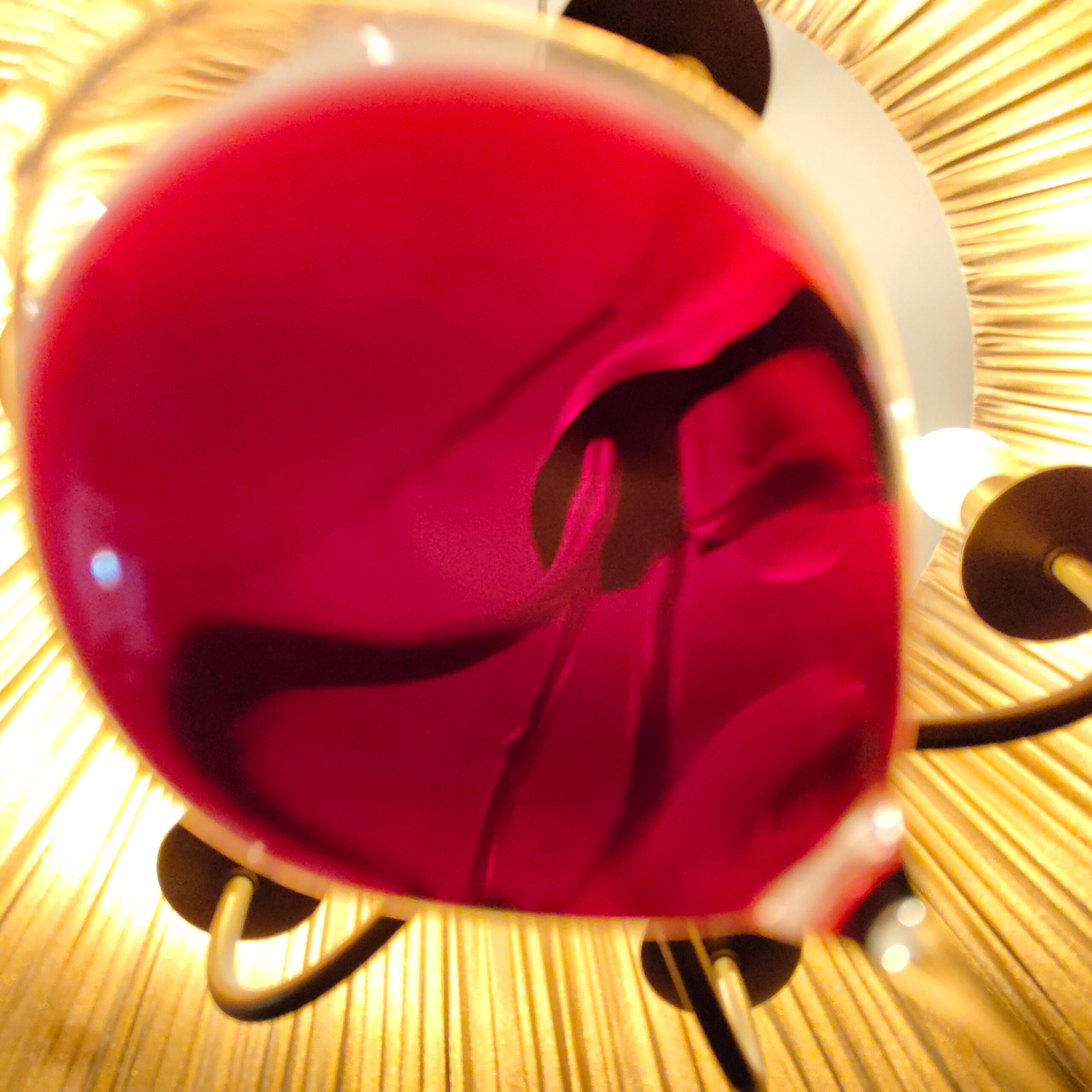
P.S. Another interesting aspect of Vladimir’s Pure Carbo is that it’s made naturally—using wild yeast, no commercial tannins, and no additives. It’s also naturally filtered, with just racking, yet look how crystal-clear the wine is!
Moreover, since Ijevan has strong export agreements, this wine is already available in Russia (around 1500 RUB) and should soon be available in the EU. It’s one of those rare cases where you can recommend an interesting, new Armenian wine to a friend, knowing that it’s widely available in other markets.
Leave a Reply